
Explosion Proof Battery Handling Truck
The Explosion-Proof Battery Handling Truck is a specialized explosion-proof device designed for transporting, loading, unloading, and replacing batteries in flammable and explosive environments. Featuring a systematic explosion-proof engineering design, the vehicle ensures stable, precise, and efficient handling of heavy batteries while safeguarding personnel and site safety.
Home » Explosion Proof Battery Handling Truck
What Is an Explosion Proof Battery Handling Truck?
The Explosion-Proof Battery Handling Truck is a specialized piece of equipment designed for transporting, installing, and replacing industrial batteries. It is engineered for use in industrial environments where flammable or explosive hazards exist.
The most common applications for this equipment include:
chemical plants, battery workshops, paint shops, storage areas, and locations with combustible gases or dust.
The core objective of the explosion-proof battery handling truck is singular: to safely perform battery operations within hazardous environments.
- The two-stage reduction rear-wheel drive technology with parallel motor arrangement, combined with rigorous and scientific ergonomic design, effectively ensures the machine’s reliability and stability.
- Both front and rear axles are connected via leaf springs; hydraulic brakes are reliable and effective.
- Features an original imported controller with an intelligent protection system, delivering stable and dependable performance.
- AC maintenance-free explosion-proof motors deliver robust power, brushless operation, lifetime maintenance-free performance, and high operational efficiency.
- Explosion-proof power supply offers extended lifespan, rapid charging, and strong endurance.
- Explosion-proof rating: Ex d s IIB T4 Gb/Ex tD A21 IP65 T135℃.
- Suitable for material handling and loading/unloading operations in Zone 1, Zone 2, Zone 21, and Zone 22 explosive gas and dust environments within hazardous industries such as petrochemical, textile, pharmaceutical, food processing, paint manufacturing, and military applications.
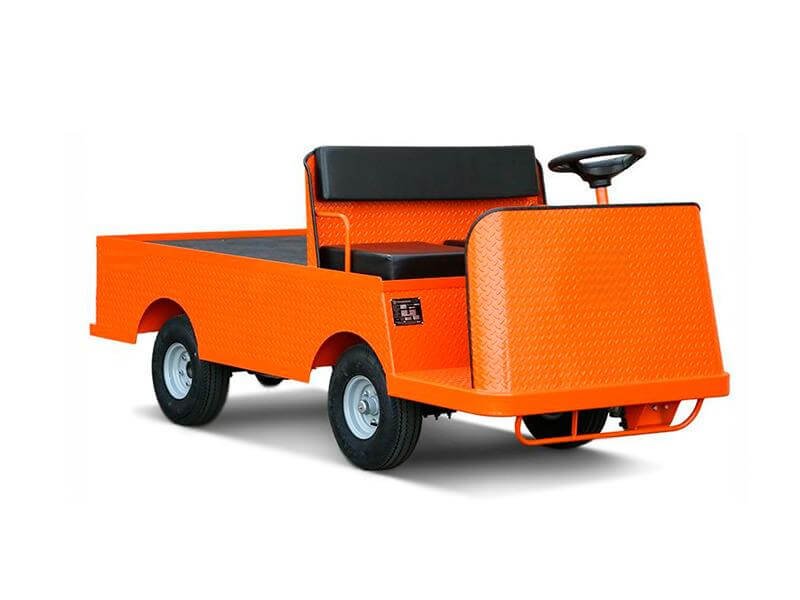
Key Technical Highlights of Explosion Proof Battery Handling Truck
Explosion-Proof Battery Handling Truck is a specialized piece of equipment designed for high-risk industrial environments. Our explosion-proof battery handling truck is used for the safe transportation and replacement of heavy industrial batteries. The equipment operates stably and controllably. The entire vehicle effectively reduces ignition risks during operation.
1. Explosion-proof handling structure specifically designed for heavy-duty batteries
This equipment features a chassis structure engineered exclusively for heavy industrial batteries. The frame's load-bearing capacity is designed around battery weight. Load paths are clearly defined and stable. Structural components can withstand high-load operations over extended periods. This design minimizes the risk of structural deformation and enhances long-term operational reliability.
2. Stable Lifting and Positioning System
The equipment incorporates a controlled lifting system. The lifting process remains smooth. The platform maintains stability at both elevated and lowered positions. Positioning mechanisms facilitate precise battery alignment. This system minimizes risks of tilting and slippage. Operators can perform placement tasks with enhanced safety.
3. Explosion-Proof Drive and Control System
The equipment utilizes explosion-proof drive and control solutions. Motors and electrical components undergo explosion-proof treatment. The system operates without generating exposed sparks. Electrical components are isolated or sealed. This system is suitable for environments with gas or dust hazards.
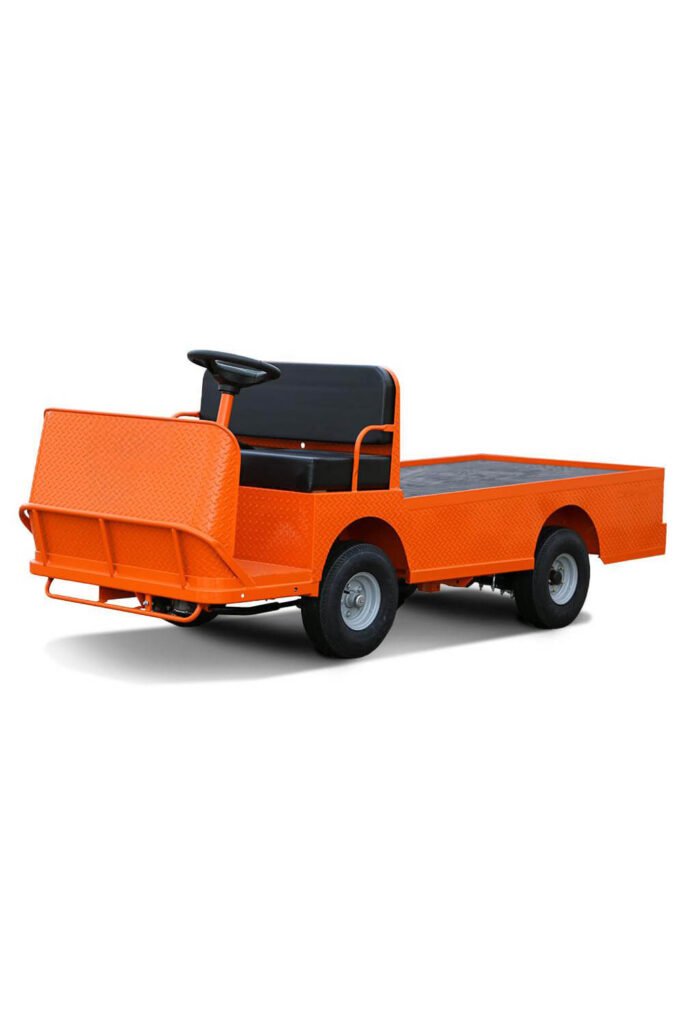
4. Compact Chassis Design
Overall equipment dimensions are kept within reasonable limits. Chassis design accounts for factory aisle widths. The equipment can maneuver within confined spaces. This structure suits frequent operations inside workshops. Users need not modify existing aisles for this purpose.
5. Multiple Safety Protections and Interlock Mechanisms
The equipment incorporates various safety protection designs. Critical actions are system-restricted. Incorrect operations are prevented by the system. Certain functions cannot be activated unless conditions are met. These mechanisms reduce the risk of misoperation and enhance overall operational safety.
6. Technical Configuration Support for Battery Specification Customization
Different factories use batteries of varying specifications. The equipment supports adjustments based on battery dimensions. Lifting height can be set according to requirements. The load platform structure can be designed to accommodate specific battery forms. This capability helps the equipment better match actual working conditions.
Basic Operating Procedures for Explosion-Proof Battery Handling Vehicles
Explosion-proof battery transport vehicles are typically used with forklift batteries, traction batteries, or industrial energy storage batteries. Operators can complete most tasks from the ground level. This significantly reduces human risk.
Lifting batteries
Moving batteries
Precise positioning
Safe placement
Application & Hazardous Environments
Petrochemical
Explosive Dust Facilities
Hazardous Chemical Plants
Paint and Coatings
Pharmaceutical Plants
Explosion Proof Battery Handling Truck Capabilities
Using our Explosion-Proof Battery Handling Truck, you can complete battery transport and replacement tasks more efficiently. It helps you optimize time and human resources while ensuring safety.
| Project | Unit | BDB1 | BDB2 | BDB5 | |||
| External Dimensions (L × W × H) | mm | 3150×1250×1850 | 3800×1400×1950 | 3950×1500×2100 | |||
| Maximum Gradeability (Unloaded/Fully Loaded) | % | 12/11 | 12/11 | 12/11 | |||
| Minimum turning radius | mm | 2500 | 3600 | 4200 | |||
| Minimum ground clearance | mm | 120 | 120 | 120 | |||
| voltage | V | 24 | 48 | 48 | |||
Reach Out to Our explosion-proof equipment Specialists for Support
For material handling in hazardous environments, there is no single explosion-proof forklift that fits all applications. Consult our explosion-proof forklift experts immediately to select the forklift solution that best meets your site’s explosion-proof rating, operating conditions, and safety requirements.
Manufacturing & Quality Assurance
For explosion-proof equipment, the delivery of safety and reliability depends not only on design principles but also on the manufacturing process itself. We manage every stage—from vehicle manufacturing and quality control to project delivery—with a focus on explosion-proof safety and long-term stable operation.
In-House Vehicle Manufacturing and System Integration Capabilities
We possess comprehensive in-house manufacturing capabilities for explosion-proof equipment vehicles. From structural fabrication to explosion-proof system integration, all processes are completed internally. This ensures high compatibility among critical systems during design and assembly phases, eliminating reliance on external assembly.
Rigorous Explosion-Proof Testing and Quality Inspection Processes
Every explosion-proof battery-powered pallet truck undergoes multiple quality inspections and explosion-proof-related tests before shipment. These focus on verifying the vehicle's stability, safety, and reliability in hazardous operating conditions, ensuring long-term performance aligns with design specifications.
Comprehensive Technical Documentation and Compliance Support
We provide complete technical documentation and configuration specifications to assist customers with project evaluations, safety audits, and compliance declarations, facilitating smooth passage through relevant review processes.
Overseas Delivery and Project Experience
Our products leverage proven overseas project delivery experience and deep understanding of international technical and compliance requirements for explosion-proof equipment. We deliver stable supply and technical support to customers across diverse countries and regions.
FAQS
1. In which hazardous areas are explosion-proof battery-powered trucks applicable?
Equipment can be configured for use in Zone 1/Zone 2 combustible gas environments and Zone 21/Zone 22 combustible dust environments.
2. Why must explosion-proof battery handling trucks be used in lithium battery or new energy factories?
Lithium batteries possess high energy density. Sparks, static electricity, or overheating during handling can trigger severe safety incidents. Explosion-proof battery handling trucks mitigate such risks through systematic explosion-proof design, ensuring safety and compliance.
3. What distinguishes explosion-proof battery-powered pallet trucks from standard models?
Explosion-proof models feature specialized explosion-proof engineering in electrical, control, and power systems, whereas standard trucks lack the capability for safe operation in hazardous environments.
4. How is explosion protection achieved in the equipment?
Explosion protection is realized through systematic whole-vehicle design, including explosion-proof electrical component selection, sealing and temperature rise control, controlled logic, and anti-static/spark-proof structural design—not merely by adding protective components.
5. Does it support batteries of different sizes and weights?
Yes. The equipment can be customized based on battery dimensions, weight, and handling methods to ensure stable and safe transportation.
6.Can explosion-proof battery transporters be used for battery replacement operations?
Yes. Explosion-proof battery transporters are suitable for battery replacement, transfer, and positioning tasks, enhancing replacement efficiency while reducing personnel risks.
7. Are they suitable for high-frequency or continuous operation?
Yes. The equipment is designed for high-frequency and continuous use, making it suitable for sustained operations in production lines or warehousing areas.
8. Is the explosion-proof battery transport vehicle suitable for narrow aisles?
The equipment can be structurally and dimensionally configured based on on-site aisle widths, making it suitable for factory aisles and confined spaces.